Sunday, 19 September 2010

When in Bath, do as the Romans do...

Of all the places I have been to so far in my 3 weeks in the UK, none have mesmerised me more than the Roman Baths at Bath. Hilary was working in Taunton on Friday 10th (which is in the south of England) so she offered to drop me off on her way. So after waking up at 5am we were off on the road. 2.5 hours later we were in Bath. Given that it was still very early and next to nothing was open I decided to get something to eat. So there I sat, right outside the Roman Baths, in Bath, sipping on a hot chocolate and eating a Danish pastry. Life is tough! I sat there and watched the town come to life as more shops around me opened up and people started their day.
When the Tourism Centre opened up I headed in to check out what was on offer. I started the day with a trip to the actual Roman Baths. It is difficult to explain how amazing the baths are. The architecture used, the technology and science incorporated…the Romans knew how to build a leisure centre!
The baths were constructed in around 43AD around a natural hot water spring which earlier settlers thought to be sacred. The spring was named the Kings Bath and therefore no one bathed in it. Lead pipes were used to direct water into the Great Bath which is an Olympic sized pool in the centre of the complex. On each end of the Great Bath lies a wing of smaller baths and rooms, men one and women the other. Originally they all bathed together but the then Emperor caught wind of it and decreed that they should have separate bathing times and rooms. No one took any notice though. It took 43 decrees and him turning up personally to stop everyone stripping off for a swim together.
The water in the spring comes up at about 43 degrees Celsius and by the time it reaches the Great Bath it is about 36. You can see steam coming off the water in both the spring and the Great Bath. Apparently in winter the steam fills the whole place and people have to walk through a thick fog.
The spring is fed from rain falling on the mountains. It takes 10,000 years for the rain to reach the spring. As part of later renovations the Romans built a number of saunas. People would be covered in oil then go into the sauna where a servant would scrape them with a butter knife type object. The servants would often bottle the men’s sweat scrapings as women liked to add it to their make-up thinking they would be more appealing to the men. For a civilization that controlled a huge part of the world and were ridiculously innovative and industrious…they were pretty delusional!
Four hours later and I forced myself out of the place to get some lunch. Lunch was at another café just outside the baths in an open forecourt area where some girls were trying to sing opera.
Following lunch was a 2.5 hour guided tour of the city. My guide was a retired school principal so he had a lot of odd quirks. Even still, he was a great guide, discussing the diversity of the architecture throughout the town, how to ‘read’ a building, the principal players in Bath’s history and the history of the place. There is a lot of money in Bath. The famous Royal Crescent (row of million dollar town houses shaped in a crescent) is ridiculously exclusive with a large private lawn out the front and a Ha-Ha (a hidden wall).
By the end of the day I was exhausted, both physically and mentally! I did a huge amount of walking and a huge amount of learning.
It really blew my mind to see something so old. My whole trip this far has really made me realise: Australia is barely a toddler in the great scheme of things. I am exploring castles that were built hundreds of years before Capt Cook was even born, churches that were built in the 1000s and 1100s, and the Roman Baths which were built in 43AD, left to ruin, grown over, forgotten about for hundreds and hundreds of years then rediscovered when somebody wanted to build a new building on top of it.
It is a huge reality check to read and hear the history of some of these places and really appreciate where we have come from and what people have had to go through in the centuries before us.
It is a humbling experience.


The tough European lifestyle!


The Great Bath
I was quite tired here...and it was only 9am.


The King's Bath/Sacred Pool

Remaining stone work from Temple entrance


The original entrance - steps mid left is the original doorway
Curvature of the stepping stones indicates how popular the baths were

Original Roman drain. Very steamy as water temperature is about 46 degrees Celsius!


Great Bath
Green tinge comes from sun exposure. Originally Bath covered with a giant arcing roof.


Original lead piping used to transport water to the individual baths and saunas


Piles of tiles supporting flooring
Originally a floor would have sat atop of these piles. A furnace would be burning in an adjoining room with the heat directed into this room. Water would be thrown on the walls which, combined with the hot air travelling in the space below the floor, would create a steam room!


Water fountain from spring

My glass of 10,000 year old hot water...yummy!


The town finally coming to life. Buskers were everywhere!


The only remaining part of the town wall erected in medieval times.
Significantly lower than the current ground level.


Bath weir...installed to control major flooding issues.


Part of The Circus...exclusive townhouses made up of three similar stretches which face in to make a circle.


The Royal Crescent
The stonewall in front is a Ha-Ha (hidden wall). It is used so that the owners of the flats didn't have their view interrupted by a big wall...but were still protected from people trying to climb it.

The Bath Abbey was where the coronation of Edgar took place in 973AD

Looking back on the Roman Baths with the Abbey in the background.

Friday, 17 September 2010

A hint of Melbourne...

The weather was promising to be sunny on Thursday 9th so I took the chance of heading into London again to go on a bike tour of the city. The tour was great, one of the guides was Australian and there were a couple of Aussies in my group. We headed off through Kensington Gardens and past Kensington Palace (the home of Charles and Dianna, then later just Dianna. Now it is only used for when Harry has a big night on the town and can’t make it back to Clarence House). From here we headed through Hyde Park and to the Wellington Arch, named after a high ranking officer of the military who pulled himself out of poverty to become the Duke of Wellington. While we were in the middle of the archway an official motorcade came through with Police bikes and cars escorting it. We tried to look in the windows but the glass was too dark. Next to the Wellington Arch is the Australian Armed Forces Memorial displaying all the villages where British and Australian troops have fought together.
We then continued along through St James’ Park and followed the back fence to Buckingham Palace. No matter how many postcards you’ve received or TV clips it has been in, as soon as you see the Palace you get excited. It is such an awesome building! We stopped quickly to take in the view before heading off down the Mall and on to Trafalgar Square where we had our lunch break.
With the lunch break over we headed into Westminster and passed the Wellington Barracks and Guards Museum. It was here where London’s similarity with Melbourne was truly experienced. One moment the sun is shining and we are all wiping a few beads of sweat off our brow…the next minute it’s cold, windy and absolutely bucketing down. We were all soaked through in 30 seconds.
We peered out at Westminster Abbey and Parliament House from under a tree in the rain and learnt about the painful end of Guy Fawkes. The rain wasn’t easing up so we decided just to keep going and headed back into St James’ Park. As soon as we entered the gates the sun came out again! Some good photo opps (especially considering there were some ex-QUT students in my riding group and I was wearing my Business Exchange shirt and had my blue cube handy!)
We then headed back through Hyde Park and stopped off at the Albert Memorial and had an interesting chat about what Albert has been remembered for in modern day society.
By the time we made it back to the bike sheds we were all warm and dry. Typical Melbourne weather!

Me attempting to ride a bike and take a photo of myself
Kensington Gardens


Kensington Gardens/Hyde Park


Wellington Arch


Buckingham Palace


Trafalgar Square with Big Ben in the background

Me...dripping wet...and freezing!
St Paul's Cathedral

Wednesday, 15 September 2010

Little Lichfield

On Wednesday 8th I headed off to Lichfield which is where Hilary works. Lichfield is a nice little town about an hour away from Rugby.  I got there just before lunch so Hilary and I headed off to grab something to eat at a great restaurant that sits on top of one of the large ponds (pools) in the town centre. After lunch Hilary headed back to work and I started exploring!
On the list of places to see was the Samuel Johnson Birthplace Museum, which was also his family home. Samuel Johnson is mostly known for publication of the Dictionary of the English Language.. The museum was wasted on me as I had no idea who he was.
After the museum I snuck into the Guild Hall and took some photos quietly…I’m not sure if I was really supposed to be there. I then headed to the sight of what was once an old Franciscan Friary and is now a community garden.
The main attraction at Lichfield is the three spired cathedral, the only one of its kind in England. The cathedral is huge and the front entrance is covered in statues. Inside is even more spectacular than outside. Unfortunately the stained glass window is being repaired…but if I come back in 10 years I will be able to see it! The skull of St Chad lies within the cathedral in an upper room. They would bring it out on special occasions to show off to the congregation.
Across from the cathedral is the home of Erasmus Darwin, the grandfather of Charles Darwin. Erasmus was also a leading scientist and all around smart guy…but it wasn’t worth the entry price to see the house of some old guy who is trading off of his grandson.
After this it was time to meet Hilary at her office and head home. But I did pass some ducks on my way…I’ve named them Zsa Zsa Gabor ducks…I hope Matthew likes them.
Samuel Johnson's dictionary...thrilling stuff!
Site of the old Franciscan Friary
Statue in honour of Capt. Smith - Capt. of the Titanic
One of the pools in Lichfield (not for swimming...obviously)
Lichfield Cathedral
The front is covered in hundreds of statues
A room where the Bishop washes the feet of the other ministers at Easter time.
The ministers sit on the red cushions while someone stands behind them in the gap between the pillars, supporting their back.
Slices through the carvings inside the chapel from the Civil War and sword fighting
The stained glass window closed for repair...for the next decade!

A mallard!
Zsa Zsa Gabor ducks with their fluffy hats!

British Museum status: CHARM INTACT

On Monday 6th I treated myself to a day in London. There is so much to see in London that I wouldn’t have been able to fit all of it into the weekend I was going to be there. So I jumped on the train and arrived in a slightly miserable London Euston and started to explore the big smoke.
First destination was St Pancras International. This is the train station for the Eurostar which heads across Europe. It is also the location of the St Pancras International Champagne Bar, Matthew’s second home (if he could afford it). The bar isn’t as impressive as I was expecting but still very cool as the seats are arranged like an old train coach with little booths and the actual Eurostar trains come up right next to you. The station is built underneath a giant arching roof top that seems to stretch on forever and at one end is the well-known 3 storey statue of a couple kissing.
After sending a photo of where I was to Matthew so that he felt a little jealous, I headed out to see King’s Cross station (purely because of Monopoly) then on to the British Library. The library is huge and shaped somewhat like a super tanker as the architect wanted it to be “floating on a sea of knowledge”…righto then. The King’s Library is an exclusive collection that is suspended over several stories and sits in the middle of the building under lock and key.
The big ticket item for me at the library was the original Magna Carta. This was the document that relinquished a lot of the crown’s powers to the barons. It has a rocky history starting in about 1215 where it was ratified then Pope Innocent III gave a Papal Bull outlawing the document only 10 weeks after being ratified. Then it was introduced again but modified and so on. Only four copies were ever made and the Library has two.  Absolute highlight of my day. Also on display were a number of Da Vinci’s drawings, Beethoven’s tuning fork which he later gave to Gustav Holst, early draft of the Messiah and Jane Austen’s writing desk.  Lots of cool stuff.
After the library I headed to the British Museum which, despite popular opinion, hasn’t lost its charm! The building is amazing with a giant frosted sunroof in the middle. I only dropped in for an hour or so but still managed to see the Rosetta Stone (only knew of it because of a Matthew Reilly book series), part of the Sphinx’s beard, the statue of Ramesses the Great and the oldest item in the library, a primitive cutting stone…it just looked like a rock to me.
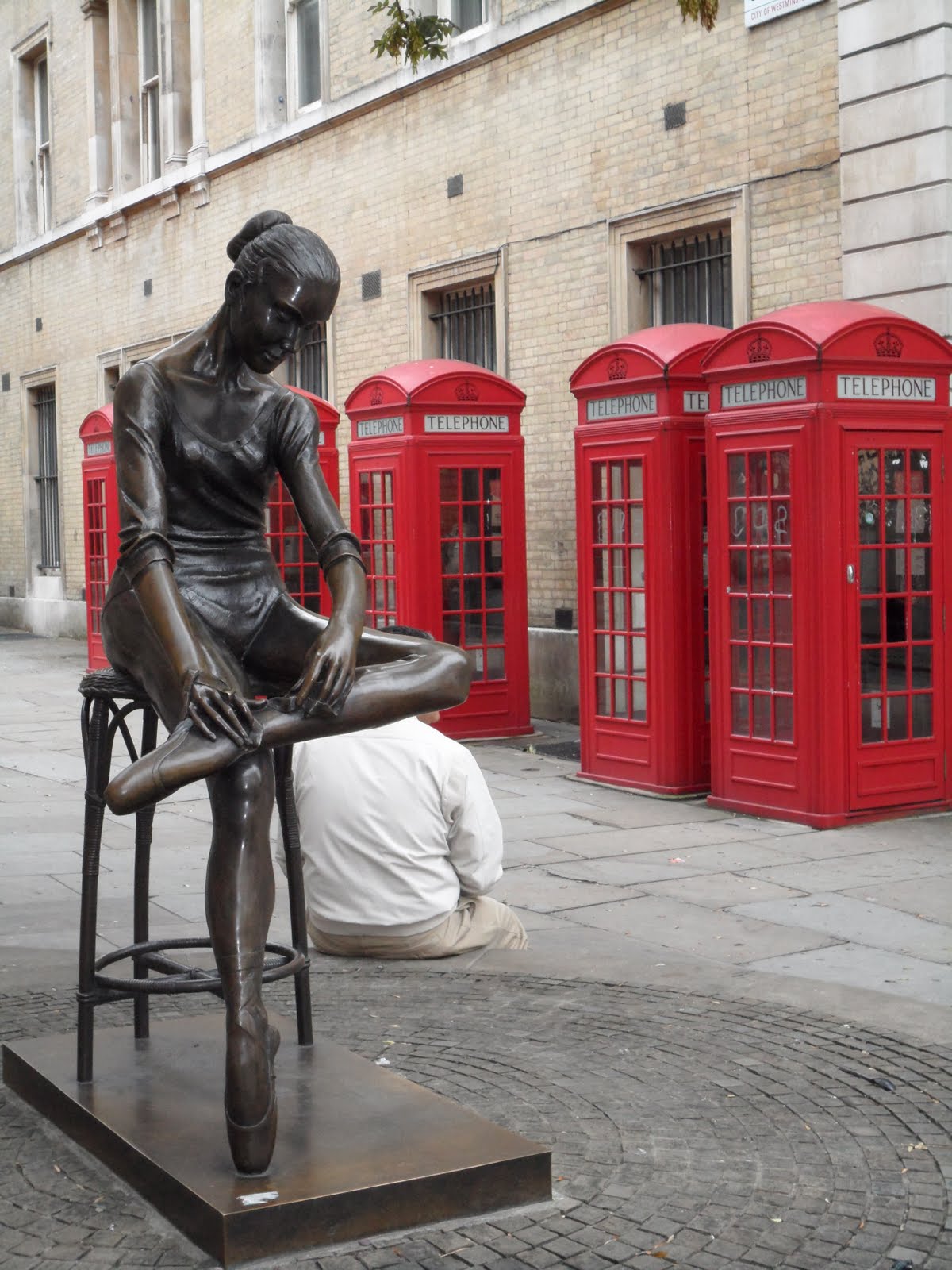
After my quick dash into the museum I started wandering the streets of London…safe I know! I ended up in a lovely part of town called West End, a.k.a. THEATRELAND! I walked around trying to think if I had enough money to see everything. I’m still counting my pennies. Right next door was Covent Garden markets. I was expecting to be blown away by the talent of performers and atmosphere of the place but I really wasn’t. Perhaps it was because it was a miserable  rainy Monday and the first day back at school for the country…but I wasn’t all that impressed. I left hoping that my next trip would be better!


King's Library


Magna Carta 1225


Magna Carta 1215


da Vinci's drawings

St Pancras International


Statue of couple at St Pancras


St Pancras Champagne Bar

British Museum

Apparantly the oldest piece in the museum's collection...just looks like a rock to me


Rosetta Stone...explains how to read hyieroglyphics

Royal Opera House

Covent Gardens

Entertainers in the markets

Statue in West End